 Pacific Law
Last Will Executor: Roles and Responsibilities
An executor is the person you appoint in your last will to manage and distribute your estate. Choosing the right executor is one of the most important decisions in estate planning. Their role is critical to ensuring your wishes are carried out properly.
What Does an Executor Do?
The executor has broad responsibilities after your death:
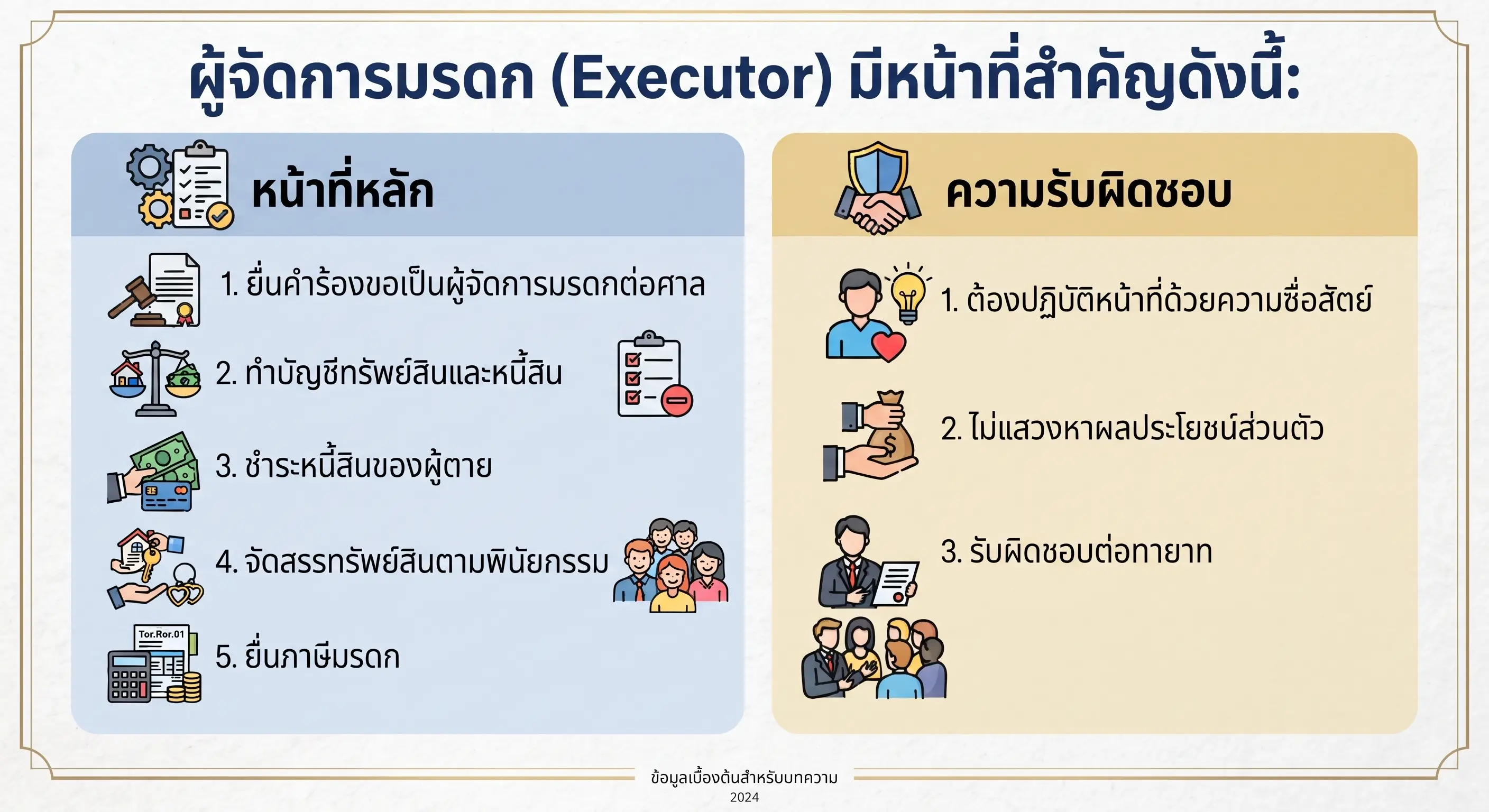
- Finding the will — Locating and presenting the will to the court
- Managing assets — Taking control of all estate property
- Paying debts — Settling all outstanding obligations and taxes
- Distributing assets — Transferring property to beneficiaries as specified
- Handling legal matters — Dealing with courts, banks, and government agencies
Key Responsibilities in Detail
1. Probate the Will
The executor must submit the last will to the probate court in Thailand. The court reviews the will and officially appoints the executor. This process validates the will and grants the executor legal authority to act.
2. Inventory and Appraise Assets
The executor must locate, list, and value all estate assets. This includes:
- Real estate properties
- Bank accounts
- Investments and securities
- Vehicles
- Personal property and valuables
3. Pay Debts and Taxes
Before beneficiaries receive anything, the executor must:
- Pay all outstanding debts
- Settle inheritance tax obligations
- Pay administrative costs
- Handle any legal claims against the estate
4. Distribute Assets
After debts and taxes are paid, the executor distributes assets to beneficiaries according to the last will. This involves transferring property titles, closing accounts, and ensuring each beneficiary receives their share.
5. Maintain Records
The executor must keep detailed records of all financial transactions. They must provide an accounting to the court and beneficiaries showing how the estate was managed.
How to Choose an Executor
When selecting an executor for your last will, consider:
- Trustworthiness — This person handles your entire estate
- Competence — They need organizational and financial skills
- Availability — The role requires significant time and effort
- Impartiality — They should be able to handle family disputes fairly
- Willingness — The executor must agree to serve
Can I Appoint a Professional Executor?
Yes, you can appoint a lawyer or professional executor in your will. This is often recommended for complex estates or when family dynamics are challenging.
Executor Compensation
In Thailand, executors are entitled to reasonable compensation for their work. The amount is typically a percentage of the estate value, as specified in the will or determined by the court.
Consult a Will Lawyer
An experienced will lawyer in Thailand can help you choose the right executor and ensure your estate planning is comprehensive. They can also serve as your executor if needed.