 Pacific Law
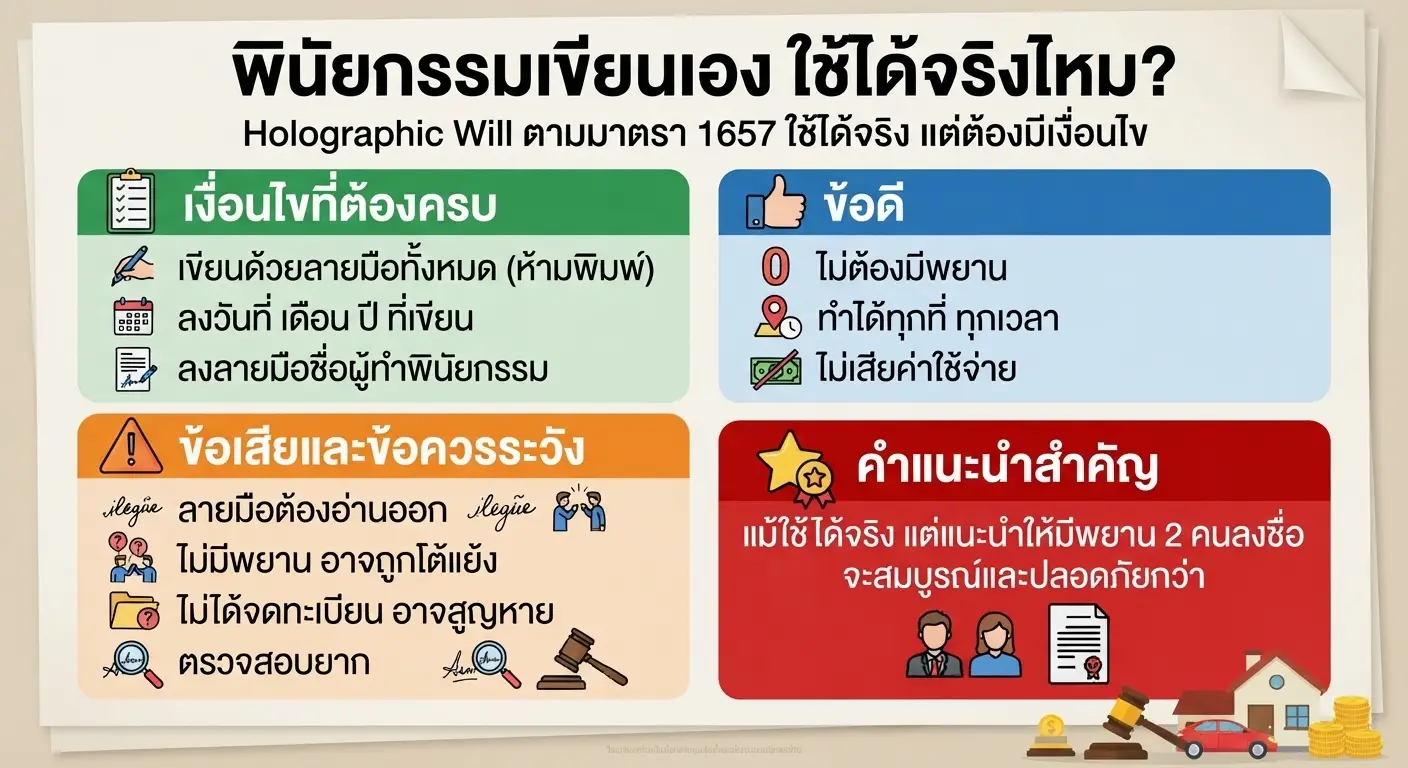
Handwritten Last Will in Thailand: Pros and Cons
A handwritten will (also called a holographic will) is one of the simplest ways to create a last will in Thailand. It requires no witnesses and can be written entirely by hand. However, this simplicity comes with risks. Understanding the pros and cons helps you decide if it's right for your estate planning.
What Is a Handwritten Will?
Under Thai law, a handwritten will must be:
- Entirely written by the testator in their own handwriting
- Signed with the testator's full name
- Dated
Any typed, printed, or photocopied sections invalidate the will. The entire document must be handwritten.
Pros of a Handwritten Will
1. Free to Create
The biggest advantage is cost. A handwritten will costs nothing to create. There are no lawyer fees, notary charges, or witness requirements.
2. No Witnesses Needed
Unlike other types of wills, a handwritten will does not require witnesses. This means you can create it privately without involving others.
3. Quick and Simple
You can write a handwritten will in minutes. There's no need for appointments, drafting sessions, or legal procedures.
4. Easy to Update
Want to make changes? Simply write a new version. There's no formal process required for updates.
Cons of a Handwritten Will
1. High Risk of Invalidity
Handwritten wills have the highest invalidation rate. Common problems include:
- Mixing handwritten and typed text
- Missing signature or date
- Unclear handwriting
- Ambiguous language
2. No Professional Review
Without a will lawyer, you may make legal mistakes that invalidate the will. A lawyer ensures compliance with Thai law.
3. Vulnerable to Challenges
Handwritten wills are easier to challenge in court. Beneficiaries may claim:
- The testator was coerced
- The will was altered
- The testator lacked capacity
4. Limited Customization
A handwritten will may not address complex estate situations. It's difficult to include:
- Detailed property descriptions
- Specific distribution conditions
- Tax planning strategies
- International assets
5. Language Barriers
If you write the will in one language but your family speaks another, translation issues may arise during probate.
When to Use a Handwritten Will
A handwritten last will may be appropriate if:
- You have a very simple estate
- You need an immediate temporary solution
- You want complete privacy
- Your assets are minimal
When to Choose a Professional Will
Consider a professional will lawyer if:
- You own real estate or significant assets
- You have a Thai spouse or children
- You want to minimize inheritance tax
- You need bilingual provisions
- You want maximum legal protection
Get Professional Help
While a handwritten will is an option, most people benefit from professional estate planning. A will lawyer in Thailand ensures your wishes are legally protected and your family is secure.