 Pacific Law
Last Will for Land in Thailand
Land is often the most valuable asset in a Thai estate. Without a proper last will, your land may be subject to disputes, delays, and unintended distribution. Including land in your estate planning is essential for protecting your legacy.
Land Ownership Rules in Thailand
Understanding land ownership rules is crucial before creating a will:
- Thai nationals — Can own land freely
- Foreigners — Restricted from direct land ownership (with exceptions)
- Companies — Can own land under certain conditions
- Leaseholds — Long-term leases may be inheritable
Types of Land Ownership
Chanote (Title Deed)
The most secure form of land ownership:
- Full ownership rights
- Can be freely transferred through a will
- Requires proper documentation for transfer
- Highest value and easiest to inherit
Nor Sor 3 Gor
A common form of land title:
- Confirmed land rights
- Can be transferred through a will
- May require additional steps for foreign inheritance
Nor Sor 3
Unconfirmed land rights:
- Can be transferred with approval
- More complex inheritance process
- May require land office approval
How to Include Land in Your Will
To properly include land in your last will:
1. Accurate Description
- Full address and location
- Title deed number (Chanote number)
- Size in square meters or Rai
- Boundaries and adjacent properties
- Current usage (agricultural, residential, commercial)
2. Clear Beneficiary Designation
- Full legal name of the inheritor
- Relationship to you
- Specific share if dividing among multiple heirs
3. Address Outstanding Obligations
- Outstanding mortgages or loans
- Land taxes and fees
- Maintenance obligations
- Lease agreements
4. Consider Special Instructions
- Should the land be sold or kept?
- Conditions on use or development?
- Instructions for crops or improvements?
- Environmental considerations?
Land Transfer Process
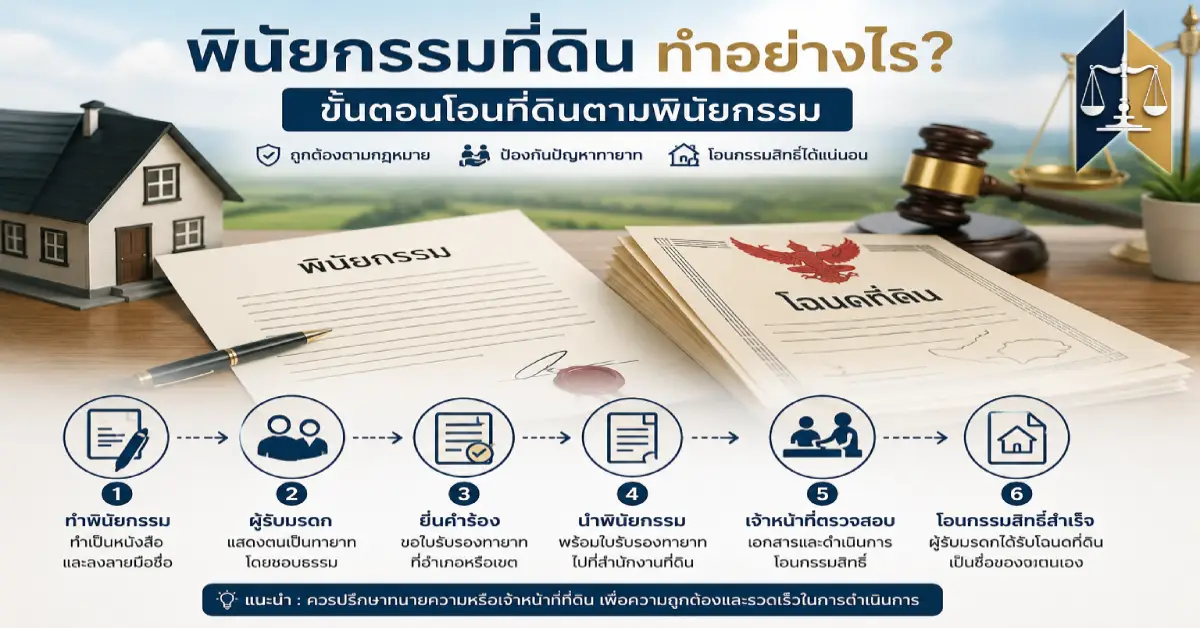
After your death, the land transfer process involves:
- Probate court approval of the will
- Land office verification of ownership
- Title deed transfer to beneficiary
- Registration of new ownership
- Payment of transfer fees and taxes
Required Documents
- Court order approving the will
- Original title deed
- Death certificate
- Beneficiary identification
- Transfer fee payment
Foreign Land Ownership Challenges
Foreigners face additional challenges:
- Direct ownership prohibited — Most foreigners cannot own land
- Exceptions — Board of Investment privileges, treaty rights
- Inheritance options — Thai spouse may inherit, then transfer
- Legal consultation essential — Complex rules require expert advice
Solutions for Foreigners
- Thai spouse as joint owner
- Company ownership structure
- Long-term lease arrangements
- Usufruct rights
Common Land Will Issues
Avoid these problems:
- Inaccurate descriptions — Causes transfer delays
- Ignoring ownership type — Different titles have different rules
- Forgetting mortgages — Beneficiary inherits debt
- No executor appointed — Complicates the process
- Foreign ownership issues — May make inheritance impossible
Protect Your Land Today
Land is a valuable asset that deserves proper protection. A well-drafted last will ensures your land goes to the right person and avoids complications. Consult a will lawyer in Thailand to create a comprehensive land will as part of your estate planning.