 Pacific Law
Legal Heirs in Thailand: Who Inherits Without a Will?
In Thailand, when someone dies without a last will, their estate is distributed to legal heirs according to the Civil and Commercial Code. Understanding these rules is crucial for estate planning, even if you plan to make a will.
What Are Legal Heirs?
Legal heirs are people who have a legal right to inherit from a deceased person. Thai law defines specific categories of legal heirs and the order in which they inherit.
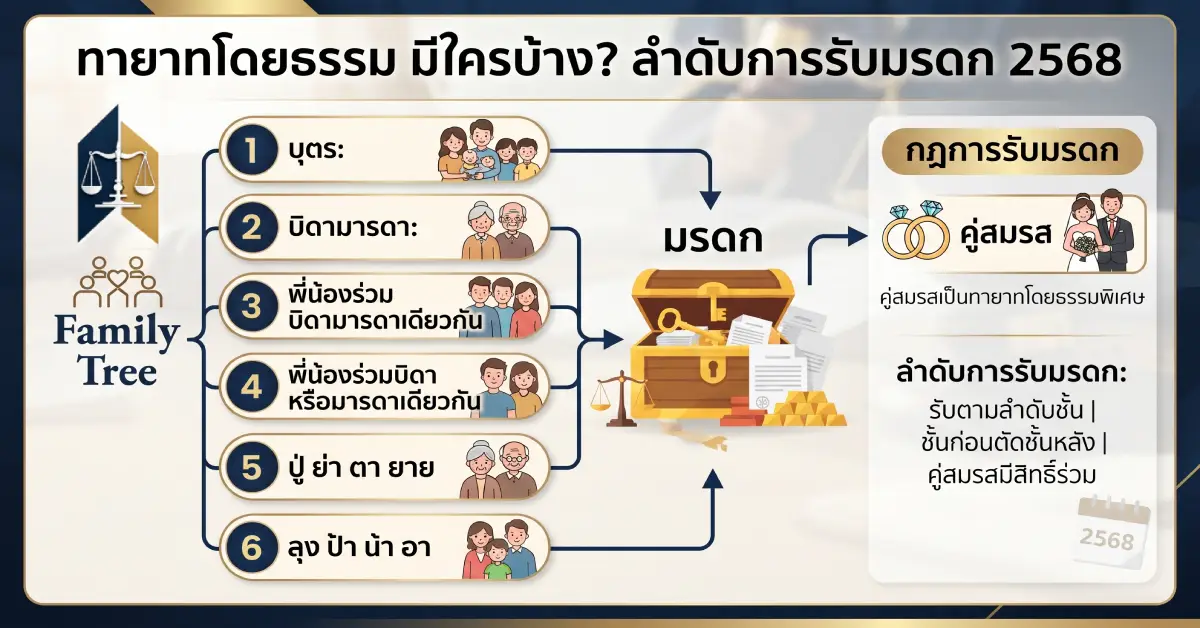
The Order of Legal Heirs
Thai law follows a strict hierarchy for legal heirs:
First Priority: Descendants
The first in line to inherit are descendants:
- Children — Sons and daughters (including adopted children)
- Grandchildren — If a child predeceased the testator
- Great-grandchildren — And so on
Descendants inherit in equal shares. If a child died before the parent, their children (grandchildren) inherit that share.
Second Priority: Parents
If there are no descendants, parents inherit:
- Father and mother — Share equally
- If only one parent survives, they inherit everything
Third Priority: Siblings
If there are no descendants or parents, siblings inherit:
- Full siblings — Share equally
- Half-siblings — Inherit if no full siblings exist
Fourth Priority: Grandparents
If none of the above heirs exist, grandparents inherit.
Fourth Priority: Uncles and Aunts
If no other legal heirs exist, the estate goes to the deceased's uncles and aunts.
The Surviving Spouse
The surviving spouse has specific rights:
- With descendants — Spouse inherits 50% of the estate
- With parents — Spouse inherits alongside parents
- With siblings — Spouse inherits alongside siblings
- No other heirs — Spouse inherits everything
Problems With Legal Heir Distribution
Relying on legal heir rules can cause problems:
- Unintended distribution — Assets go to people you didn't choose
- Excluded beneficiaries — Close friends, charities receive nothing
- Family disputes — Disagreements over fair shares
- Delayed probate — Courts must identify all heirs
- Frozen assets — Bank accounts locked during process
Why You Need a Last Will
A last will overrides legal heir rules. With a will, you can:
- Choose exactly who inherits each asset
- Give more to some heirs than others
- Provide for non-relatives
- Make charitable donations
- Appoint your own executor
Estate Planning Is Essential
Even if you're comfortable with legal heir rules, creating a last will provides certainty and control. A will lawyer in Thailand can help you understand your options and create a comprehensive estate plan.
Consult a Professional
An experienced will lawyer can explain Thai inheritance laws and help you protect your family. Don't leave your estate to chance — start your estate planning today.